So you want to start an Ecological Learning Centre?

Apart from farming and tourism, what kind of work is available for young people in rural areas today? I talk with Shuchin Shu, an activist (with a Masters in Environmental Art) who heads the Yunhe Forest School in Zhonglu village in China’s Ganzi Tibetan Autonomous Region.

Designing for life: sounds nice, but where are the jobs?

A talk in Shanghai during the launch of Design Harvests 3, the urban-rural innovation programme. The idea of “designing for life” sounds meaningful – but what do those words mean in practice? Are there jobs are available in that space?

Dates for 2026 MeetUps in France

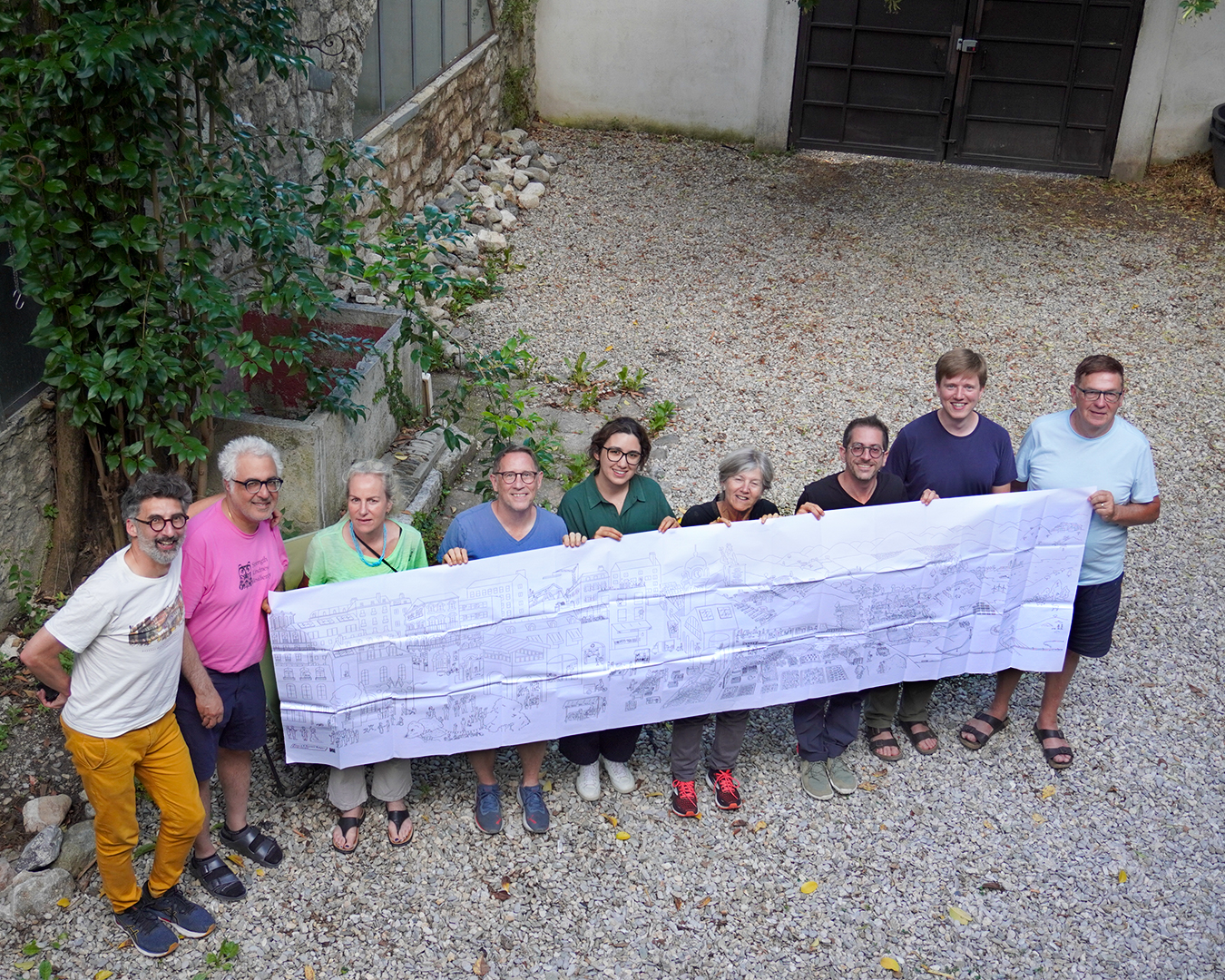
Some people come to reflect on what designing for life might mean for them. Others are working on a live project, thesis, course, or book. We also welcome those who want to transform their professional situation, and only do good work. They use a time-out here to figure out how to do that.

Ecological Knowledge Systems

Under what circumstances would people interested in earth repair, ecological restoration, and civic ecology, find each other and what they need?

Designing for life, for real

I was amazed and delighted to be awarded the Frontier Design Prize in October 2025. An initiative of the city of Shanghai, the Prize was for my “exceptional and far-reaching contribution to the field of regenerative design and social innovation”. That was my own highlight of 2025 - but what comes next?

Care, Value, Place2, Mumbai, October 2025

India’s Natural Farming movement is now active in 20 of India’s 29 states, and the Indian government has just launched an National Mission on Natural Farming. At this year’s Care, Value, Place #BITSDesignSchool at I asked, what practical acts of care might design offer to India’s Natural Farmers?

The ecological economy is now

The following text is my keynote talk at last week’s World Design Cities Conference (WDCC25) in Shanghai. At that same event I was astonished - and delighted - to be awarded the Frontier Design Prize. This talk (video below) is a fair summary of the work being recognised by that award.

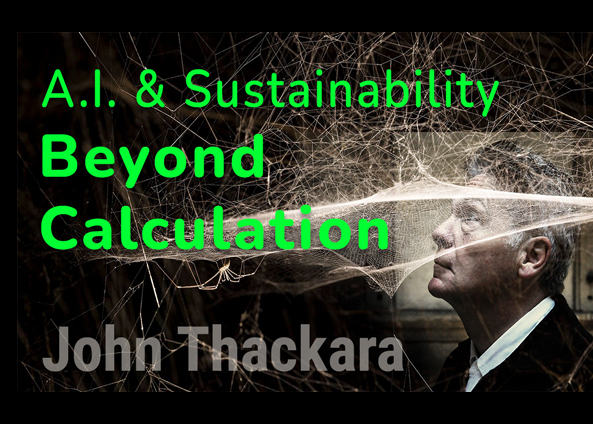
From Green Design to Ecological Design (2): Beyond Calculation: AI and Sustainability

Trillions of dollars of climate finance need nature to be machine-like. But nature is not a machine. So how shall we proceed? In this 20′ talk, I ask: Can AI serve all of life, not just human life? And if so, how?

How to balance proximity and modernity

John Thackara Newsletter August 2025

“Balancing proximity and modernity” is the informal theme for our last MeetUp of the year which starts on 28 August (until 4 September).

I’m borrowing the words from Frédéric Bosqué who’s developing a rural transition neighborhood called Tera in the Aquitaine region of France. [continue …]

AgTech for Agroecology

Strengthening food webs is not like designing a bridge. Rather it's a distributed social process of ‘muddling through’ together. It means embracing a messy politics of relationship, nuance, context, complexity and co-learning.

In a cave with crows

In a soundscape called The Cave, it’s as if you are surrounded by crows and even interact with them. At different moments one hears the call of a solitary crow; a communal chorus; the sound of mass fluttering when they all take off at once; or the barely audible cheeps of what seem to be intimate conversations.

What can art bring to soil care?

It’s not about more data or less - it is about the social contexts in which data is collected, discussed, and acted upon. The same lesson applies, I think, to discussions about ‘nationwide’ and ‘local’. We need to operate at both scales.

Bioregional Conversations

We ask real-world practitioners: What does bioregioning mean to you ? How does it catalyse/amplifiy your work? Which relationships are most important in your work?

Caring for Place vs Systems Thinking: Can They Meet?

The uniqueness of place is hard for systems thinking to cope with. Systems thinking aspires to be – well, systematic. But blueprints, canvases and method cards are thin on the ground – literally – among place-caring practitioners. How can this mismatch be fixed?

Design for Multi-Species Cities

Background reading for a workshop: "Design an urban ecology tool, equipment, place, or experience, that will enhance the interdependence of all life in practical ways".

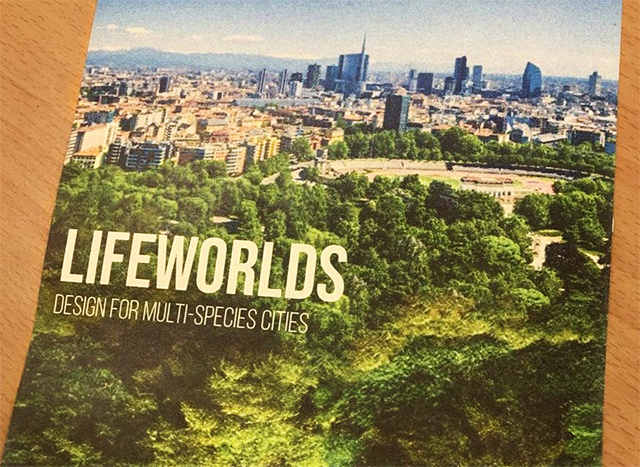
Design for multi-species cities

There is often more biodiversity in a city’s neglected spaces than in well-maintained parks and gardens - and at multiple scales, from microbiome, to bioregion. But these lifeworlds have been hidden from us during the urban age

Infrastructures of care

Most of these projects that are heavy, expensive and ecologically damaging. But in the absence of practical alternatives, simply saying "Stop!" is hopeless advice for the millions of people whose livelihoods depend on hard infra, now. Alternatives to concrete - infrastructures of care - are proliferating, and design can play a key role in moving these alternatives into the mainstream.

Design and Energy: Thirteen Great Writers

1. TOM MURPHY – DO THE MATH
If you suspect, but cannot prove, that modern life simply does not add up, you’ll love Tom Murphy’s work. His focus, as a physicist, is to understand whether the impossibility of indefinite physical growth – for example in energy, food, or manufacturing – means that economic [continue …]

New Thackara MeetUp: 9-16 September 2023

“How do I finish a book on design that I began before the pandemic?”
“How can I do meaningful work if my job is just about tech?”
“With so many crises converging, what does it mean to do foresight work?”
“Where can my skills be socially useful?”.
“Should I quit my job? Academic research [continue …]

Lifeworlds: Nature as urban infrastructure

Plans are being made to plant billions of trees – but who will care for them, and how? One answer: Green infrastructure is as much social, as it technical. That lesson informed the design of these urban ecology tools, equipment, and experiences.

Ethics, Design, Care

This short talk is about an economy with caring for life as its centre, rather than extraction and production. I compare earth care to modern medical care, and suggest that looking is not the same as caring. I ask what design can learn from Care Ethics – and find inspiration [continue …]

The Good Work In Urban-Rural

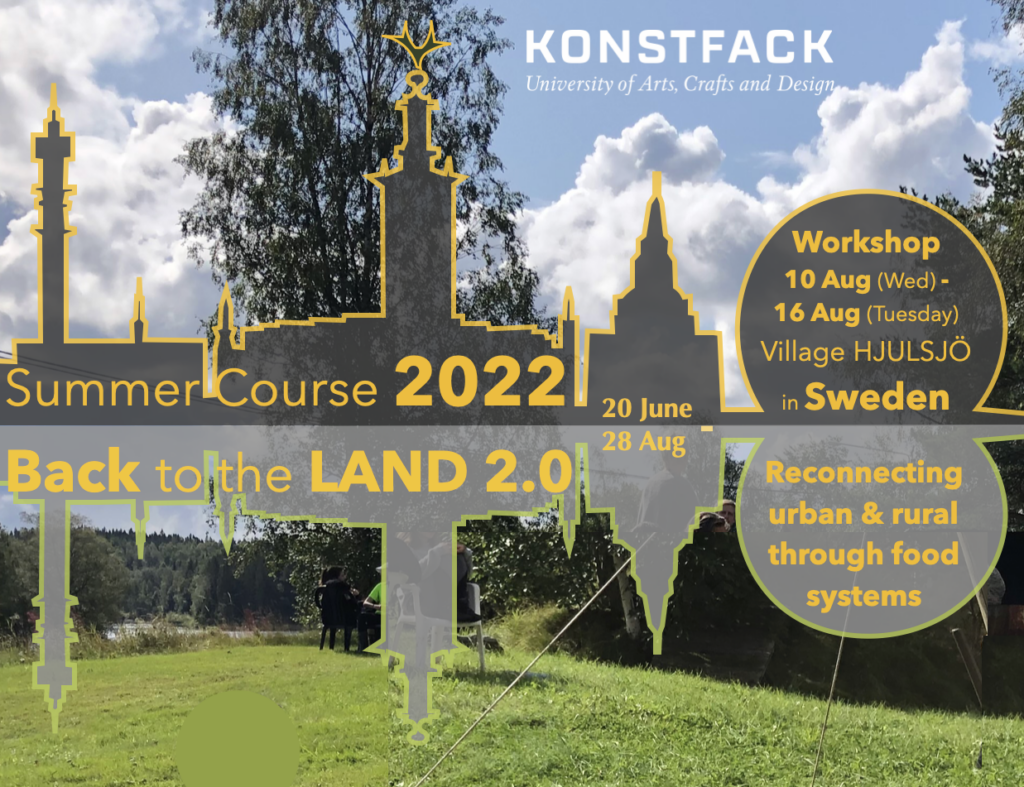
A new course in Sweden asks, “what will a self-sufficient Hällefors Municipality taste like in 2030?” By turning ‘would-be-nice’ ideas into tangible prototypes, it turns ecological transition from an aspiration, into a practice. Included here: 20x emerging new livelihoods - from Edible Food Forests, to School-Farm Biocantines

Modern Environmentalism: A Rough Guide from Gilgamesh to COP26

Alastair McIntosh reminds us here that the World’s oldest book, the Epic of Gilgamesh, portrayed tension between the wild and the civilised. The Buddha taught the interconnection of all things. Plato depicted the world as being “a living god”.

Sustainable Finance vs the Real World

These are curious times. Even as the world burns, sustainable finance and green capitalism are booming: Sustainability Reporting. Net Zero. Climate Finance. ESG. Green New Deal. By some estimates, assets invested with environmental, social and governance (ESG) criteria now top £35 trillion. Why would investors put money into an asset [continue …]

The (Design) Journey Back To Local

You and I use more energy & resources in single month than our great-grandparents used during their whole lifetime. The science says we can thrive in future - but only if we meet our every day needs using 5% of the energy and material throughputs we’re using now. What are we supposed to do with that information?

Social Food Green Paper

Agriculture and food are not just about production and consumption - they are about relationships, too

Back To The Land 2.0: Some JT Videos

Mapping Local Resources. Connecting Growers & Citizens. New Co-operatives. Urban-rural reconnection. (These videos introduce the annual Back To The Land 2.0 summer school, in Sweden, that I run together with Konstfack).

Sustainability You Can Touch

I was stupefied when I read this text in 2020: “CEO Anne Rigail announces that Air France will offset all carbon emissions from the 450 domestic flights it runs daily. It will do so by funding projects to plant trees, protect forests, transition to sustainable energy, or protect biodiversity” A [continue …]

Food Systems and Design

new ways to think about food and food systems - how to be, as well as what to do, in a food context

From Control, to Kinship: Ecological Restoration in a More Than Human World

(Keynote talk in China) A just transition will happen when we see nature differently, relate to nature differently, and understand the purpose of development differently. So, can AI foster new ways of knowing and being in the world? Can it be medium of attention; a medium of connection; a medium of relationship with the living world?

Ideas for the City That Cares: Ezio Manzini’s new book, Livable Proximity

(This my review of Ezio Manzini's new book). You and I use more energy & resources in single month than our great-grandparents used during their whole lifetime. The science says we can only thrive in future by meeting our everyday needs using five percent of the energy and material throughputs we’re using now. That’s a Factor 20 reduction. What is anyone supposed to do with that information?

Tonantsintlalli – a Multidimensional Mother Earth


Can indigenous knowledges help us inhabit our own places in a more adaptive and responsive ways? Can connection with these kinds of lived experience help us redefine development, and progress, in our own situations? The text here is my introduction to "Tonantsintlalli - a Multidimensional Mother Earth" in Australia

Go to Top