About care
MicroStimuli: The New Science Of Persuasion
One promise of MicroStimuli is that millions more of us will press “Buy”. Could they get us to click a button called “Care”, instead?
About care

One promise of MicroStimuli is that millions more of us will press “Buy”. Could they get us to click a button called “Care”, instead?

India’s Natural Farming movement is now active in 20 of India’s 29 states, and the Indian government has just launched an National Mission on Natural Farming. At this year’s Care, Value, Place #BITSDesignSchool at I asked, what practical acts of care might design offer to India’s Natural Farmers?
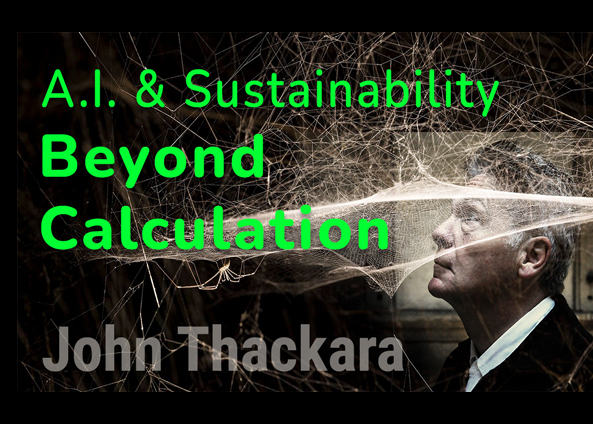
Trillions of dollars of climate finance need nature to be machine-like. But nature is not a machine. So how shall we proceed? In this 20′ talk, I ask: Can AI serve all of life, not just human life? And if so, how?

In a soundscape called The Cave, it’s as if you are surrounded by crows and even interact with them. At different moments one hears the call of a solitary crow; a communal chorus; the sound of mass fluttering when they all take off at once; or the barely audible cheeps of what seem to be intimate conversations.
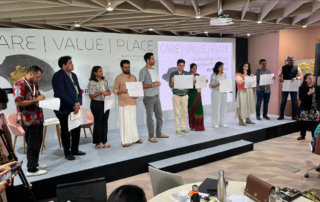
The presentations were organised into five threads: regenerative water systems; the social life of mobility; community-based recycling ; success factors in social design; and Community Managed Natural Farming
It’s not about more data or less - it is about the social contexts in which data is collected, discussed, and acted upon. The same lesson applies, I think, to discussions about ‘nationwide’ and ‘local’. We need to operate at both scales.
“From urban ecological restoration, and 15-minute cities, to ‘the last mile’ in waste ecosystems, transformative change is happening all around us. This timely event in Mumbai spotlights next-generation green projects - and how design will make them stronger”
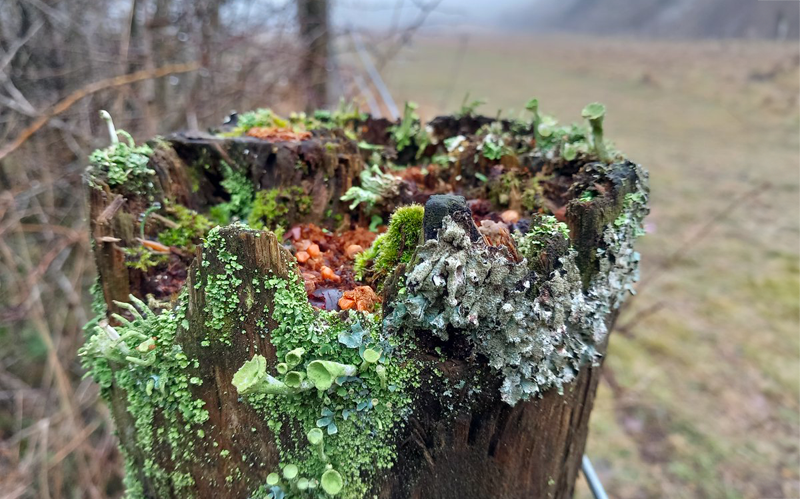
The uniqueness of place is hard for systems thinking to cope with. Systems thinking aspires to be – well, systematic. But blueprints, canvases and method cards are thin on the ground – literally – among place-caring practitioners. How can this mismatch be fixed?

Most of these projects that are heavy, expensive and ecologically damaging. But in the absence of practical alternatives, simply saying "Stop!" is hopeless advice for the millions of people whose livelihoods depend on hard infra, now. Alternatives to concrete - infrastructures of care - are proliferating, and design can play a key role in moving these alternatives into the mainstream.
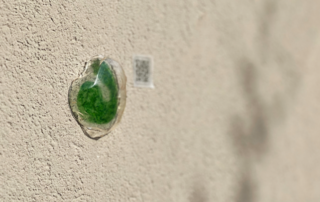
Plans are being made to plant billions of trees – but who will care for them, and how? One answer: Green infrastructure is as much social, as it technical. That lesson informed the design of these urban ecology tools, equipment, and experiences.
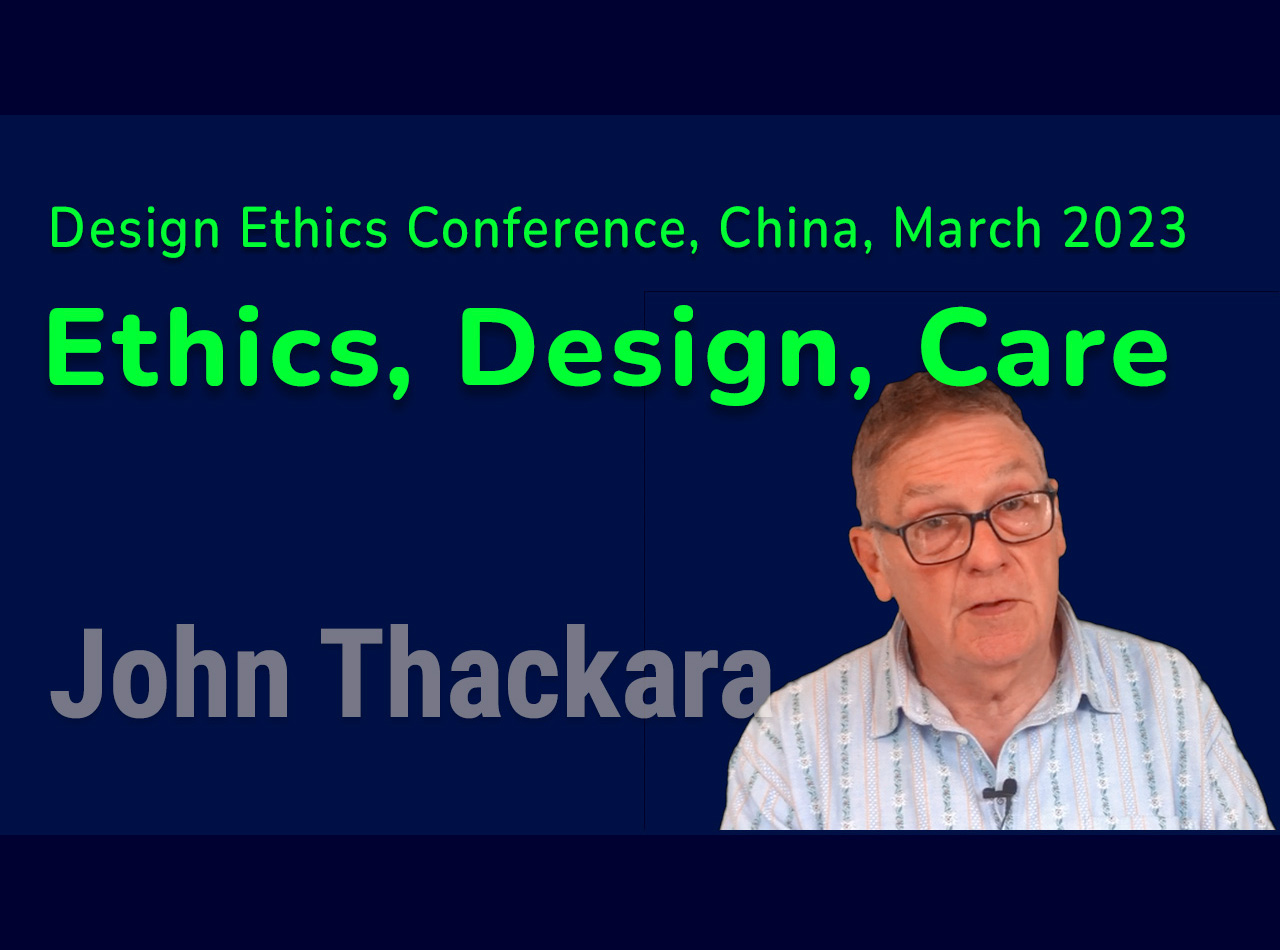
This short talk is about an economy with caring for life as its centre, rather than extraction and production. I compare earth care to modern medical care, and suggest that looking is not the same as caring. I ask what design can learn from Care Ethics – and find inspiration [continue …]
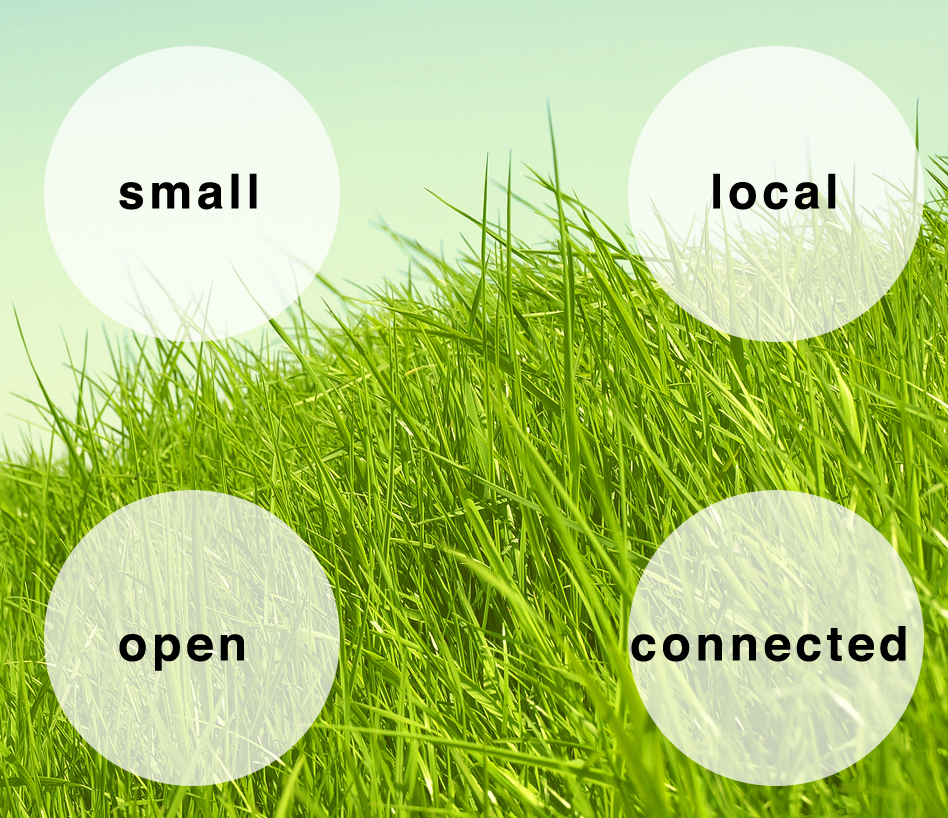
(This my review of Ezio Manzini's new book). You and I use more energy & resources in single month than our great-grandparents used during their whole lifetime. The science says we can only thrive in future by meeting our everyday needs using five percent of the energy and material throughputs we’re using now. That’s a Factor 20 reduction. What is anyone supposed to do with that information?

Mutual aid. Local money. Collaborative care. Alternative futures are being created around the world -. but not, for the most part, in plain sight. David Bollier’s new book – Commoner’s Catalog for Changemaking: Tools for the Transitions Ahead – brings dozens of social projects like these to [continue …]

(A conversation with John Wood, professor at Goldsmiths, University of London, and joint editor (with Julia Lockheart) of the Journal of Writing in Creative Practice). I question why artists and designers should be encouraged to write in an intellectual way. After all these years, I still don’t understand the need to converse in abstruse language.
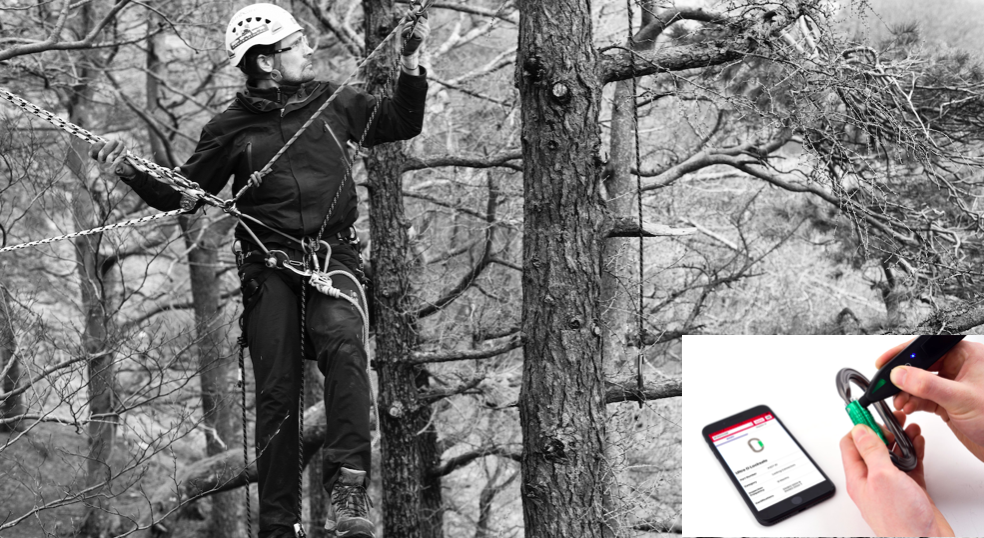
Hundreds of cities around the world are planting trees. But planting trees is just the start. A wide variety of activities and equipment - and a lot of knowledge-sharing - are involved in the management of tree popultions. Trees have to be climbed, pruned, inspected, and surveyed. All this involves equipment and services - most of which still need to be designed.

Wellbeing is intimately linked to connection - to other people, but also to place, and the living systems that inhabit it. Relational design creates those connections (I helped design this Masters in Relational Design course for Bangor University; at this time - September 2022 - it has not been re-started since Covid).

Last month I gave a talk at UC Berkeley School of Public Health, as part of the Dean’s Lecture Series, with the title, From Biomedicine to Bioregion: The Geographies of a Care-Based Economy. The video of that talk is here. My interview with Peter Jarrett, for their online [continue …]
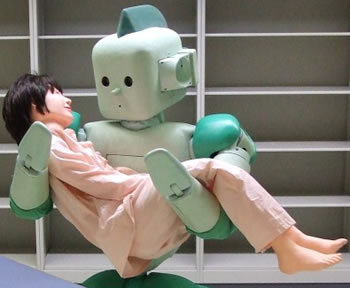
I spent the last two weeks in-and-around a care home in England that looks after people with dementia and terminal illness, and their families – including, this time, mine.
In four wings, each with 12 residents, 24/7 care is provided by teams of trained professionals who work [continue …]
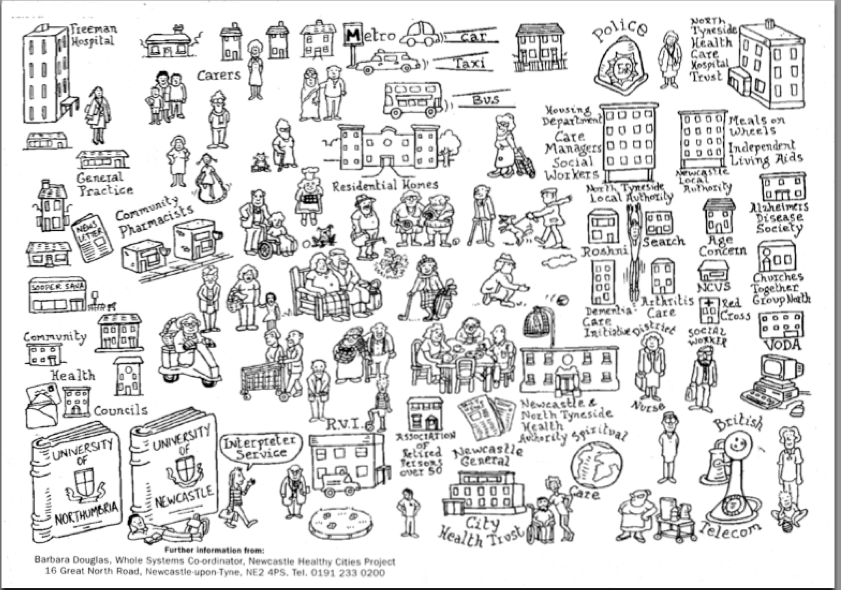
Yesterday’s G8 Dementia Summit made much of the fact that millions will now be spent in a race to identify a cure or a ‘disease-modifying therapy’ for dementia. The likely outcome will be the creation of a Dementia Industrial Complex – and the mass production of un-met expectations.A better way for [continue …]
It’s easy for two people to look at the same information – such as this chart (above) about health costs – and perceive totally different things. What I see is an out-of-control Medical Industrial Complex that’s heading, Icarus-like, for collapse. What many designers see is a sea of [continue …]
This text touches on: 'energy intensity in health systems' , 'peak fat' , '5% health in Cuba', 'the Quantified Self' , 'Design grammars for health and care' , 'doing what we know we need to do'.
I’ve been back from New York a week and I’m still mesmerised by the story of Hello Health. Tamara Giltsoff, a service designer, introduced me to this wondrous new outfit who are making it easy again to see the doctor.

The [continue …]


Mobile phones tend to be personal devices and Intel plans to take that further – a lot further.
Researchers Margaret Morris and Farzin Guilak are developing “mobile therapy” – a system of just-in-time personal coaching, by the system, that is triggered [continue …]

In January, as I do every year, I resolved to balance work and life in a more mature way. It’s now September 16th, and….well, we’re not quite there yet.
The Dott 07 Festival opens in 13 days time in Gateshead, England. It brings together the results of projects and events that explore what sustainable life in one region could be like – and how design can help us get there. North East England, as one of the birthplaces of [continue …]
After this I promise to stop obsessing about mad people running the world. But really. Today’s Guardian reports that Richard Granger, architect of the world’s biggest imploding IT project, compared the NHS project to a sled being pulled by huskies. “When one of the dogs goes lame, and [continue …]
Allan Chochinov, editor of Core77, drew my attention to a remarkably cheap – in fact, free – way to increase patient satisfaction in hospitals. According to researchers at the Mayo Clinic, patients perceive that health providers (their term) who sit during an evaluation “are their bedside for longer [continue …]
Imagine a world where every second European adult is over fifty years old. And where two-thirds of disposable consumer income is held by this age-group. By 2020 this will be a reality. There will be huge demand for services that enable older people to live independently in their own communities [continue …]
JOHNTHACKARA designing for life
© The John Thackara blog and website is licensed under a
Creative Commons Attribution-NonCommercial-NoDerivs 3.0 Unported License.
Permissions beyond the scope of this license may be available at john [at] thackara [d o t com], 1993-2026