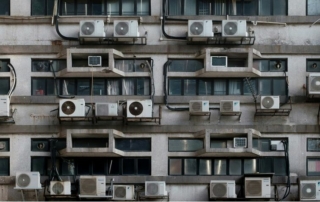
Is air conditioning modern?
As a punishing heatwave headed for a fourth week here in France, a familiar cry went up from the country’s exhausted citizens: “The government must do something”.
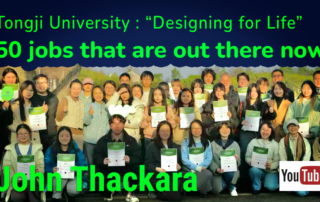
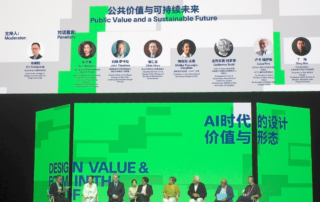
A talk in Shanghai during the launch of Design Harvests 3, the urban-rural innovation programme. The idea of “designing for life” sounds meaningful – but what do those words mean in practice? Are there jobs are available in that space?
The desired outcomes of Aral School's work are healthy social, ecological and economic systems. Many of the skills and cultural energy needed are already out there, but fragmented. New kinds of social infrastructure, together with intangible cultural heritage, can be a medium of reconnection and healing.
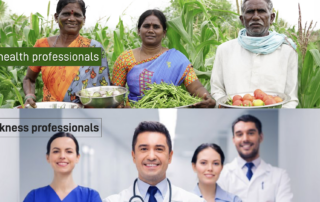
India’s Natural Farming movement is now active in 20 of India’s 29 states, and the Indian government has just launched an National Mission on Natural Farming. At this year’s Care, Value, Place #BITSDesignSchool at I asked, what practical acts of care might design offer to India’s Natural Farmers?
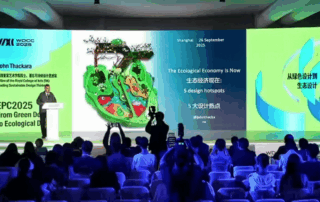
The following text is my keynote talk at last week’s World Design Cities Conference (WDCC25) in Shanghai. At that same event I was astonished - and delighted - to be awarded the Frontier Design Prize. This talk (video below) is a fair summary of the work being recognised by that award.
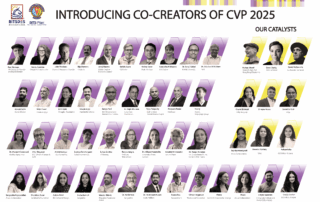
“From urban ecological restoration, and 15-minute cities, to ‘the last mile’ in waste ecosystems, transformative change is happening all around us. This timely event in Mumbai spotlights next-generation green projects - and how design will make them stronger”
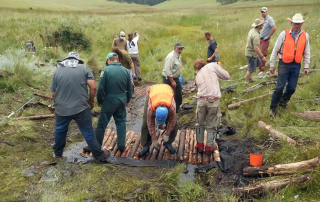
Most of these projects that are heavy, expensive and ecologically damaging. But in the absence of practical alternatives, simply saying "Stop!" is hopeless advice for the millions of people whose livelihoods depend on hard infra, now. Alternatives to concrete - infrastructures of care - are proliferating, and design can play a key role in moving these alternatives into the mainstream.
These are curious times. Even as the world burns, sustainable finance and green capitalism are booming: Sustainability Reporting. Net Zero. Climate Finance. ESG. Green New Deal. By some estimates, assets invested with environmental, social and governance (ESG) criteria now top £35 trillion. Why would investors put money into an asset [continue …]
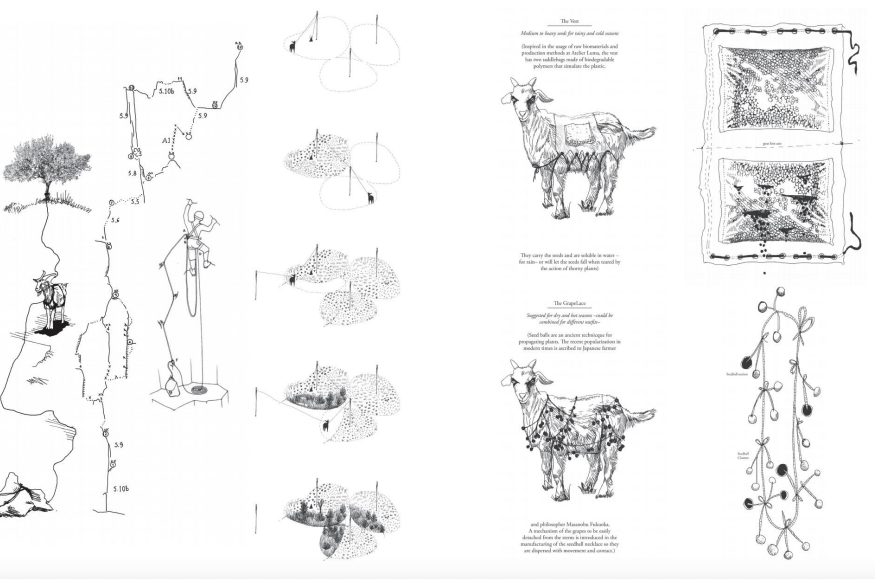
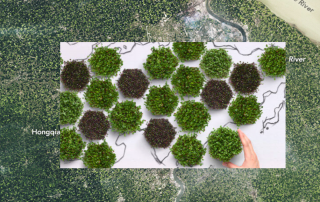
Twenty landscape students were given an unusual design brief: regenerate the soils of the Camargue bioregion - its rhizosphere - as a biological, living entity. Do do this, they were told, by creating new associations between, people, animals, vegetation, and weather.
(I wrote this Prologue) Feeling powerless to change the course of events, the inclination to switch off can feel like self-defence. Karin Fink’s response is both nimble, and wise. Rather than re-draw the whole picture at a stroke, her focus in this book is on small connections, and how to enhance them.
Paving over the soil, and filling our lives with media, obscured our interdependency with living systems. We must learn to think of the places where we live as ecosystems, not as machines. (This was my first keynote in Shanghai)
I’ve come to an inconvenient conclusion: production is not the purpose of life. I say inconvenient because many of us depend on industrial production to meet our daily life needs. But the perpetual search for new forms of production - whether ‘clean’, ‘green’ or ‘circular’ - is not where our future lies. (Interview with Valentina Croci of Domus Magazine)
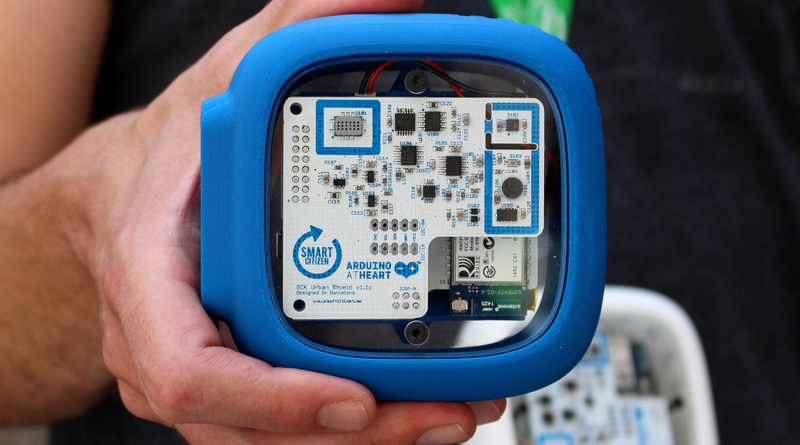
On a recent visit to @IAAC in Barcelona, I was charmed by their Smart Citizen platform. It enables citizens to monitor levels of air or noise pollution around their home or business. This innovation is impressive - but it leaves a difficult question unanswered: Under what circumstances will possession of this data contribute to the system transformation that we so urgently need?
I nearly failed to get here yesterday, and I want to tell you why.
The road from my house to the city passes through a spectacular gorge. Several weeks [continue …]
Under what circumstances would we become mindful stewards of living systems, not just their expoiters? The Dutch artist Annechien Meier re-connects us – viscerally, and emotionally – with our social and ecological surroundings.

A new book by Alex Prud’homme called The Ripple Effect addresses the “vast and desperately serious subject” of water.
The author does not hold back: all the world’s water problems are here. The sewage, fertilizers, industrial chemicals, plastics, paint, drugs, and hand soap, among other [continue …]
Ever since we organised Doors of Perception 3 on the theme “info-eco” in 1995, we’ve been preoccupied by the dilemma of environmental data. Our world is awash in eco information, we concluded then, but starved [continue …]
Shortly after my visit to Oslo I received this question from Andrea Siodmok: “what from Cornwall should the world know about?”.
The director of Dott Cornwall is preparing an exhibit to celebrate the achievements of this fascinating region in south west England, and wanted me [continue …]
(Summer re-run: first published 5 February 2008)
Ever since learning about water mapping from Georg Bertsch and about watershed-based planning in Toronto from Chris Hardwick at Doors 9 on Juice last year, I’ve been aware that we talked a lot about energy but [continue …]
“It’s too late to avert catastrophic change. Our politics and institutions are too dysfunctional to make elegant adaptations. We’d better prepare ourselves for surviving as best we can”.
Clive Hamilton’s new book Requiem for a Species is not for [continue …]
If perpetual, resource-intensive growth is no longer a viable model for the development of a city-region, what alternatives are available?
In City Eco Lab, we explored the idea that St Etienne’s river, le Furan, and the natural systems of the broader region, might be a fruitful [continue …]
The “Soft” department (above) within the City Eco Lab’s Cabane a Outils (Tool Shed) presented a variety of soft tools such as software platforms, new economic models, and design research networks. The aim was to make visitors aware of the existence of such ‘soft’ tools [continue …]
Killjoy environmentalists would have us stop shopping to save the planet. What a relief, then, to find a website, shopmodify.com, that teaches us how to shop and save the planet at the same time. I especially like their green shopping tips for Spring: “buy a hot eco-friendly [continue …]
Ever since learning about water mapping from Georg Bertsch and about watershed-based planning in Toronto from Chris Hardwick at Doors 9 on Juice last year, I’ve been aware that we talked a lot about energy but not [continue …]
Doors of Perception’s director, John Thackara, was programme director of Designs of the time (Dott 07), a year of community design projects in North East England that explored what life in a sustainable region could be like – and how design can help us [continue …]
Along, I suspect, with some of you, I failed to get into Ecologic studio’s blog (story below) but I did find this intriguing project for them by Slider Studio to “automate the process of mapping data from an environmental analysis software [continue …]
JOHNTHACKARA designing for life
© The John Thackara blog and website is licensed under a
Creative Commons Attribution-NonCommercial-NoDerivs 3.0 Unported License.
Permissions beyond the scope of this license may be available at john [at] thackara [d o t com], 1993-2025