I’ve long been trying to understand this question: “under what circumstances would the large number of people from diverse backgrounds and communities, who are interested in earth repair, ecological restoration, and civic ecology, find each other and what they need?” To folk in the software world, l the answer seems to be obvious (see Github, below) – but this is totally not the case for climate scientists, soil restorers, seed savers, river rescuers, social entrepreneurs and climate and local economy activists..
Bottom-Up AKIS – An Inclusive Stakeholder Engagement Strategy (ARC2020 2023)
Innovation is increasingly seen as a social process, more bottom-up and interactive, than top-down science to implementation. Now placing a greater emphasis on the value of the multi-actor approach (MAA), projects being funded at an EU level by the European Commission funded under Cluster 6 of the Horizon Europe Work Programme (Food, Bioeconomy, Natural Resources, Agriculture and Environment related projects), and EIP-AGRI Operational Groups (OGs) projects at a national and regional level by Managing Authorities in each of the 27 EU Member States, are embracing this concept. The MAA makes the best use of different types of knowledge and complimentary expertise (practical, scientific, technical, organisational, etc.) by bringing together key actors (e.g. researchers, advisors, agri-businesses, farmers) in an interactive way to identify and implement innovative solutions in the agri-food sector and rural economy.
Enabling farmers to be producers and not just simply recipients of agricultural innovations is an important shift in focus because a farm is not just a piece of land or a workplace, but rather represents the physical manifestation of generations of knowledge; knowledge developed and used over time by both the farmer and by those who have lived and worked there before.
A 5-step engagement process (see figure 1) aimed at mapping, analysing, categorising and connecting with an extensive and diverse network of stakeholders in the agri-food sector and rural economy from across policy, research and practice groups at EU, National and regional level,
Dr Shane Conway is Project Manager and Adjunct Lecturer in the Discipline of Geography’s Rural Studies Centre at the University of Galway, Ireland. Shane’s research interests are in agricultural and rural social sciences, with a particular focus on older farmers, AKIS, the Multi-actor Approach, stakeholder engagement; intergenerational farm transfer and the human side of farming.
Ecological Knowledge Systems. N. Roling and J. Jiggins (paper)
Ecologically sound agriculture is not just a question of changing farm practices. It also requires a transformation of a coherent system of learning, its facilitation, institutions and policies.
http://ifsa.boku.ac.at/cms/fileadmin/Proceeding1996/1996_WS03_31_Roling.pdf
The Good Work Institute in New York State (founded by one of the people who started Etsy)
http://goodworkinstitute.org/programs/overview/
Les Colibris – Pres de chez vous
To judge by project birth-rates, the next economy is emerging much faster in France than even a year ago. One page on the Les Colibris site lists 862 projects in the Marseille region alone; and Project Oasis lists 550_ next-generation resettlement projects (known in a bygone age as ecovillages).
Folk High Schools
If ecological restoration is indeed the “great work” of our time’ – then we need training centres in every bioregion. There are also many examples of existing, legacy institutions. I favour Folk High Schools for this role. They are in many ways an excellent model developed in the Nordic countries in the nineteenth century.Mainly in the Nordic countries https://en.wikipedia.org/wiki/Folk_high_school
HF Cold Hawaii, a Danish high school, lessons are rescheduled when the surf is up. The French equivalent are the Maisons Familiales Regionaux. Elsewhere, numerous and fiverse legacy entities involved in agricultural extension, farmer field schools ….
Participatory City
In big cities, amplifying the number and reach of grassroots projects takes structure, processes, commitment, and time. To this end, Tessy Britton’s Participatory City project involves, starting from 2018, a ‘demonstration neighbourhood’ of 200-300,000 people. They will test out up to 1,000 ideas over a five year period.
Stock Over Flow, Git Hub. Mozilla Badges, Envato, Laborator
The most inspiring platforms are now emerging that combine web-platforms with real-world groups. that thrive on the basis of real-time question-and-answer knowledge-sharing. My favourite examples, so far, are Ravelry (5.5 million knitters) Endless-Sphere (e-bike hackers) and the UK Alzheimers Society Talking Point https://forum.alzheimers.org.uk/. In each case, they do the job of helping people find what they need (including each other) just by asking – and not by ploughing their way through databases, knowledge managers, wikis and suchlike. To folk in the software world the answer seems to be obvious – but this is totally not the case for climate scientists, soil restorers, seed savers, river rescuers, and the like.
Guilds
John Michael Greer has been making hints for some time about the benefits of old-fashioned benevolent societies from Freemasons to Moose to the Odd Fellows. Not so long ago, they played an important role in America’s public life, a role that stretches all the way back to the early days of the republic. Providing a powerful social presence in each community, they were committed to improve local quality of life above all. Most of these groups fell on hard times in the 50s and 60s as the result of the government taking over the caregiving functions which once provided inexpensive health care and other welfare benefits to member families.
Other legacy institutions
The locally-organized folk high schools developed in the Nordic countries in the nineteenth century, the Maisons Familiales Regionaux in France , and community colleges in the US, are good example of regional institutions that we invented to ease our transition once before – and can do so again. Other examples of legacy institutions, abound. There are more public libraries in the US (120,000) than there are McDonalds. There are hundreds of YMCAs (now known as Ys) in the US, and hundreds of working mens clubs in the UK. There are the Consumers Association and Citizens Advice. Many regional and speciality museums are looking to refine their role. Untold thousands of post offices and local shops act as informal information and meeting points. So, too, do many pubs. In addition to building-based institutions, a wide variety of friendly and benefit societies still maintain active networks of volunteers: Rotary Clubs, Oddfellows, Lions, Freemasons, Elks,
“Third Spaces” – Between disciplines; between geographies; between worldviews
Green Transition Ecosystem (GTEs)
UNDP Labs (global/South)
Missions (New European Bauhaus Mission)
Bioregional Weaving Labs (EU)
There are great opportunities to connect with existing legacy or anchor institutions – such as
Public libraries (120,000 in US, more than McDonalds)
YMCAs – now known as Ys.
Community Colleges 1,100
Folk High Schools 80+
Maisons Familiales Rurales
Local and Regional Museums
Working Mens Clubs
Post Offices
Land Grant Universities
Local shops
Learning farms
Guilds
Boy Scouts and Girl Scouts
Friendly and Benefit societies
Rotary, Lions, Oddfellows, Masons
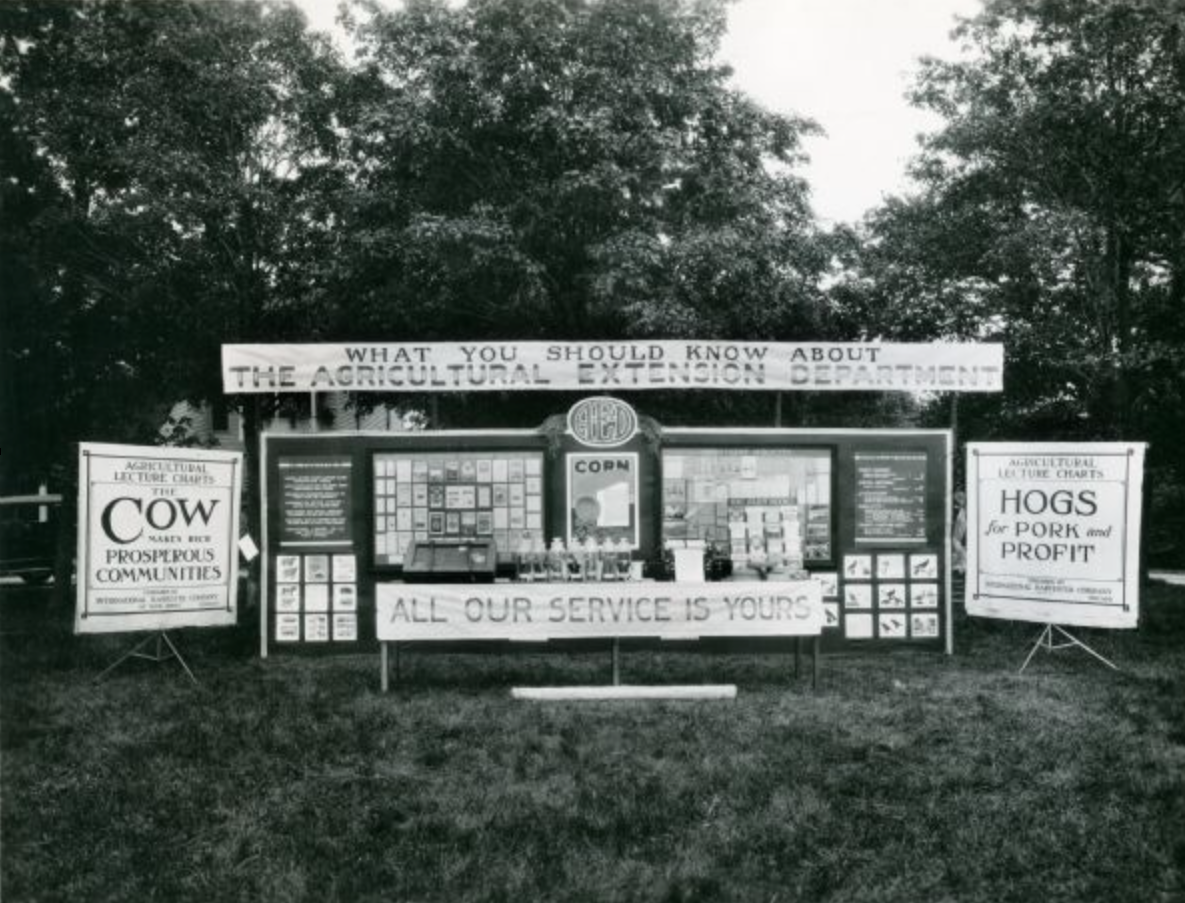
Agricultural extension services
Friendly Societies
Ethnic solidarity networks