Unusual but real-world jobs are now emerging in rural contexts: jobs in food and water systems; building re-use; next-generation hospitality; and so on.
thackara.com/bioregioning-sounds-nice-but-i-need-a-job
Earlier this year, I returned to that theme in the small village of Chedun Town, near Shanghai. Meeting under the umbrella of Design Harvests
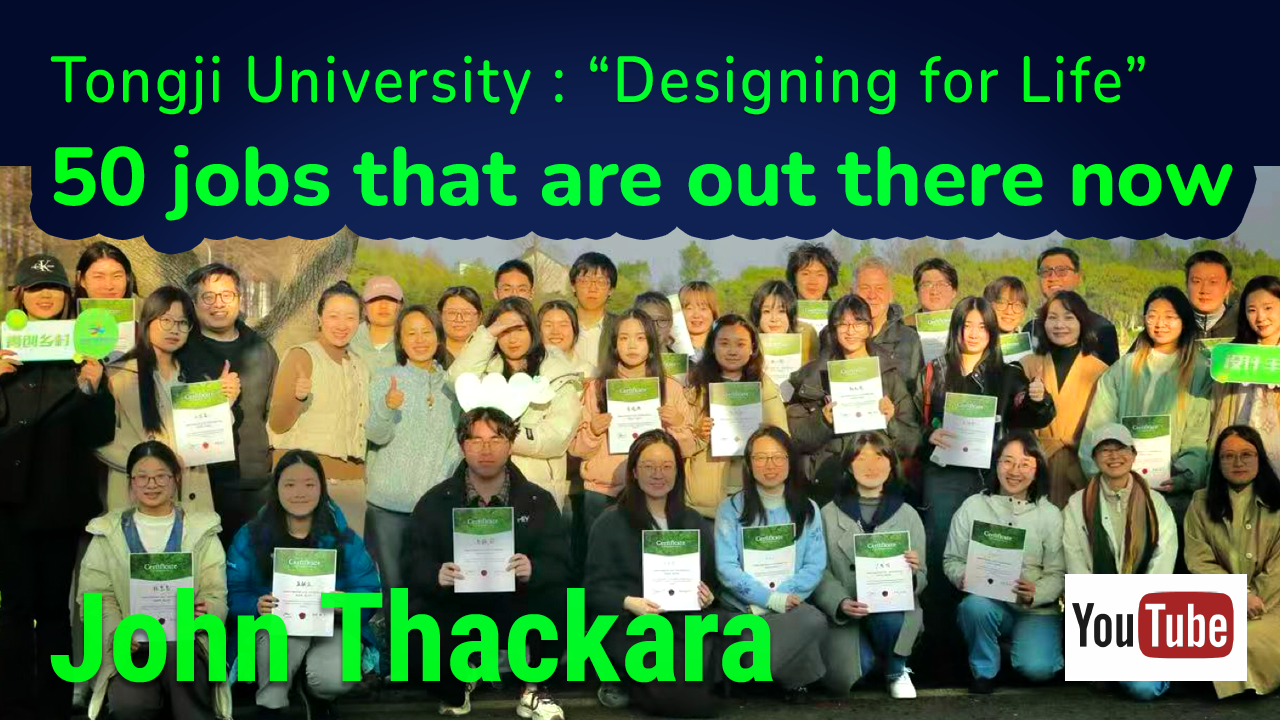
44 people came to a workshop called “Designing for life: sounds nice, but where are the jobs?“
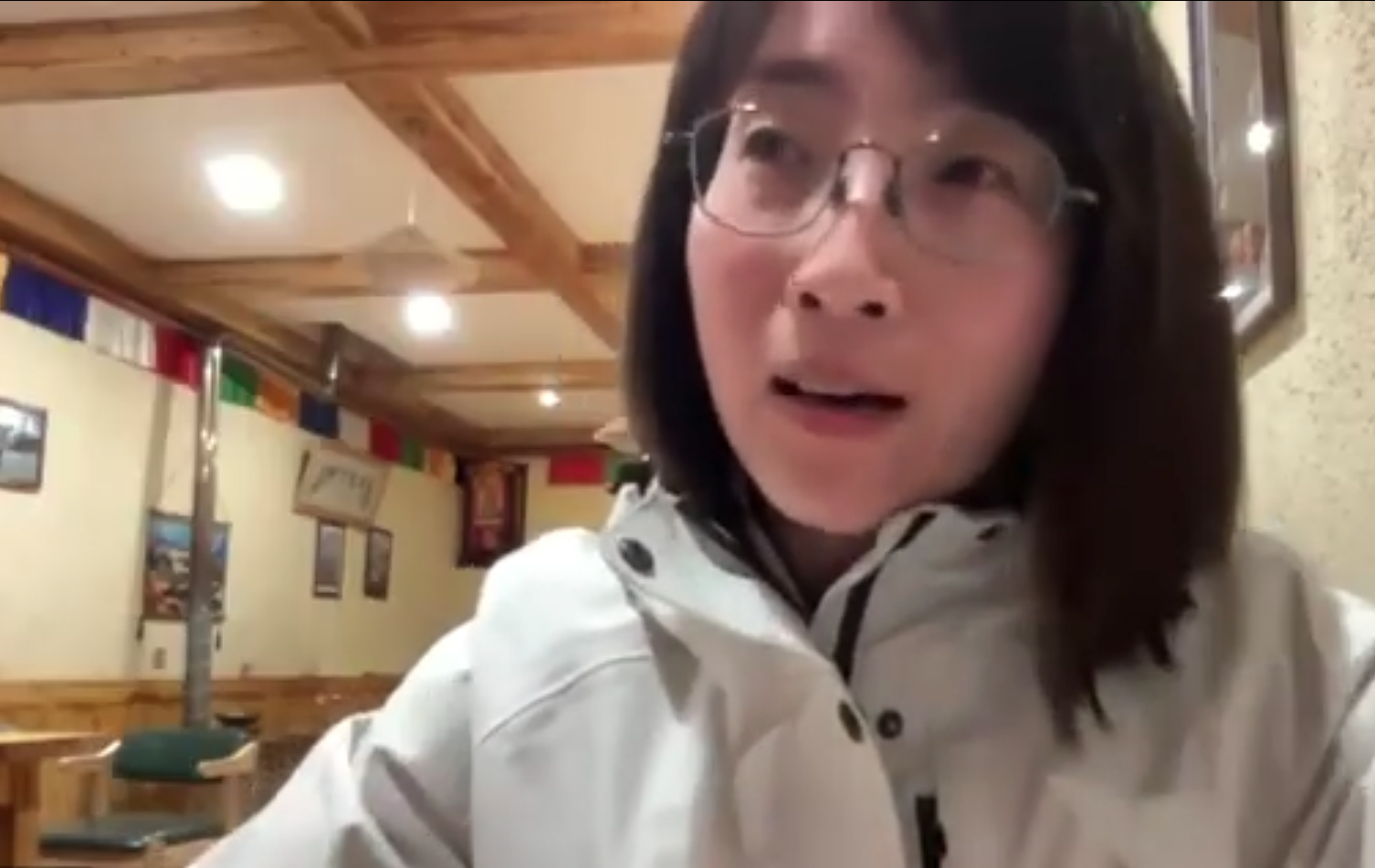
A quarter of the group were urban-rural professionals with some kind of design background. I saw on a list of the invited guests that one was a “Rural Learning Centre Principal”. This turned out to be Shuchin Shu, an activist and educator who heads the Yunhe Forest School in Zhonglu village in China’s Ganzi Tibetan Autonomous Region.
You can see my interview with Shuchin here: youtu.be/aUyWP8YbOmM
It was part of the webinar series Bioregioning In Practice: gaiaeducation.org/bioregioning-in-practice
Founded by Apple Liu Xuan in 2015, the Yunhe Centre was created to seek a balance between economic development, and ecological restoration, in communities near China’s often fragile preservation areas. yunhecentre.com
The centres – there are now four Yunhe Centres – offer project-based learning that expands the notion of “teacher” beyond a person in a classroom. Students experience the innate connections between Buddhism, ancient land use practices, ecological restoration, ecological economy, and ecological design.
For Shuchin, who holds a master’s degree in Environmental Art & Design, “the villagers and the mountains are our teachers. So, too, are other people, plants and animals, hills and rivers, gardens, community centers – and our own imaginations”.
The Yunhe Centre is run by a core team of seven – but they work with a network of of about 20 teachers, guides, drivers, cooks, and guest house hosts.
“Local relationships are our most important priority” Suchin says. In each village where thet open a centre, the local Party Secretary plays a key role in mobilising the diverse array of people amnd resources needed to support itsactivities.
Interest in the Yunhe approach growing. Shuchin estimates that ten percent of Chinese parents wish their children could have more contact with nature – and that’s a lot of parents.
Yunhe Centers are inspired by the philosophy of the Living Earth – and process-relational thinking. The earth, for them, is a living organism filled with myriad forms of life, of which human beings are a part. They encourage the development of whole persons and whole communities
Links
Yunhe Centre
https://www.yunhecentre.com/
Yunhe Centre Video
https://youtu.be/IK-w4ecS2JM?si=CQgK547VrLg6dJUE
“The villagers and the mountains are are my teachers.”
https://www.openhorizons.org/the-yunhe-center-in-china-nurturing-a-new-generation-of-young-chinese-with-ecological-mindsets-and-practical-skills.html
Ecological education:A Close Look at a Tibetan Forest School
“https://city.cri.cn/20210304/30813540-74e0-9f6f-e699-6df01e9985ce.html
Bioregioning In Practice (Gaia Education)
https://www.gaiaeducation.org/bioregioning-in-practice-2