Design Grammars for Health and Care
Health and wellbeing are properties of social-ecological systems - so how you design in those?

Health and wellbeing are properties of social-ecological systems - so how you design in those?

From fish smokers to button makers - there's so much to do.

How to develop a shared vision among multiple stakeholders - and the other capabilities we need.
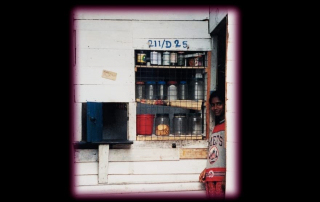
So you want to do good? Here's how to avoid the sloppy assumptions that can underly 'design for development'.
Rules that would prevent us from over-harvesting the Commons.
When and how to choose between ownership, stewardship, and partnership.
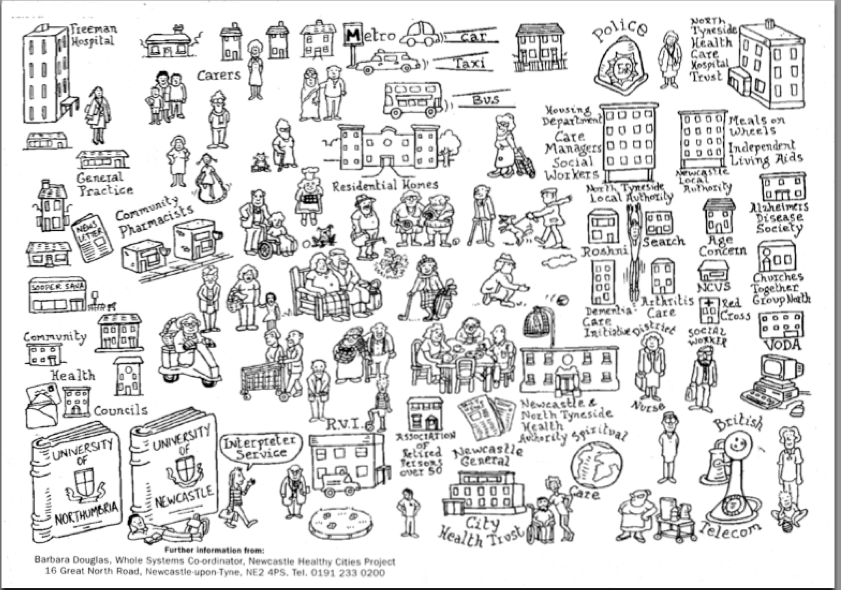
Yesterday’s G8 Dementia Summit made much of the fact that millions will now be spent in a race to identify a cure or a ‘disease-modifying therapy’ for dementia. The likely outcome will be the creation of a Dementia Industrial Complex – and the mass production of un-met expectations.A better way for [continue …]
“The global economy treats nature and material resources as if they were infinite, and knowledge as if it was scarce. We have to swap those two around”. (Michel Bauwens). Audio interview below the fold.
Having enshrined the rights of nature in its constitution (*) Ecuador is now exploring how this principle, [continue …]
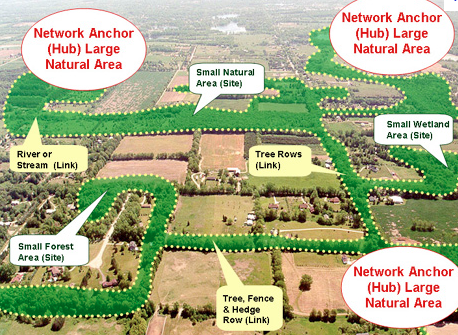
What is a 'living system'? Here are 20 elements of a green infrastructure.
127 calories of energy are used to grow a lettuce for each calory we eat. One bottle of ketchup entails 52 transport and process stages. Does that sound sensible?
http://www.doorsofperception.com/?attachment_id=5172
My hosts last week at the Asia Pacific Design Library in Brisbane (which, on reflection, is probably the finest new library I have been in) asked me a few questions before our xskool:
Q: What does a typical day look like for you?
A: When I’m on the road, which [continue …]
"We will deliver value to people — not deliver people to systems" - and 17 other easily followed rules
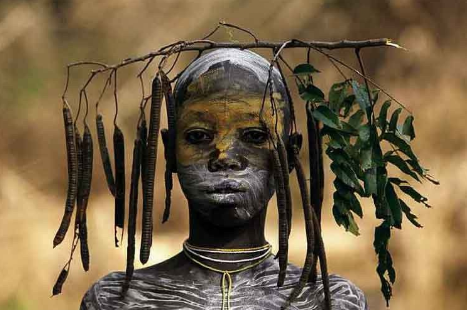
[Photograph: Hans Sylvester]
Interni and the Be Open Foundation are publishing a book, called Gallery Of The Senses, that explores the ways we experience the contemporary world through sight, hearing,smell, taste, and touch. It then asks: Are we missing a sixth sense? Here is my contribution.
Humanity’s troubles did not begin with [continue …]
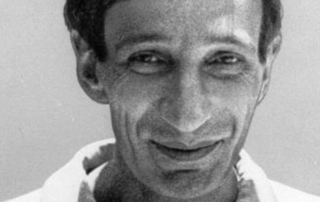
In 1996, Ivan Illich agreed to speak at Doors of Perception in Amsterdam on the theme of ‘speed’. The philosopher-educator surprised us by bringing along two fellow speakers: Sebastian Trapp, [continue …]
In 1996, when Ivan Illich agreed to speak at Doors of Perception in Amsterdam, our theme that year was ‘speed’. The philosopher surprised us by bringing along two fellow speakers: Sebastian Trapp, a field biologist, and Matthias Rieger, a musicologist. Their contributions are as fresh today as twhen we heard them in [continue …]

Reflecting on the ways that swallows move about the earth reminded me of the time, in 1996, when Ivan Illich agreed [continue …]
As an artefact, the swallows’ nest is not exactly the Taj Mahal. It’s a ramshackle structure, made of mud pellets and straw, that’s stuck crookedly to the wall. But it seems to suit them well – or rather, the surrounding habitat does.
 [continue …]
A hand, a map, a story: In each of 30 photographs made by Céline Boyer, a cartographic fragment of someone’s country of origin is projected onto the subject’s own hand. Cities, seas, rivers, roads and borders are glimpsed.
 [continue …]

In what ways can design help people interact with living systems in ways that help both of them thrive? And, what small practical steps might one take to test the effect of small actions on the system as [continue …]
"Don't think 'new product' - think social and ecological value". Plus nine other rules.
Why we need Ecological Law and what it would contain
What human cultural needs have stood the test of time?
Exhibits and competitions should be a means to an end, not the end itself. What would be a worthwhile end?
CONTENTS
On Getting Out Of The Tent
Xskool in Sweden: Design Within Living Systems
How To Use A Fringe-Dwelling Change Agent
Most-Read Stories
Recent Publications
Doors at 20: On getting out of the tent
Nearly twenty years ago, in November 1993, the year the web was invented, the first Doors of [continue …]
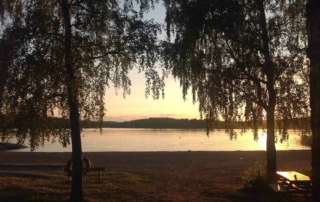
[Above: somewhere on the island of Grinda in the Stockholm Archipelago., where FuturePerfect takes place 14-18 August).
What are social-ecological systems? How do you design in them? What new skills do we need to do so? These three questions inform a Doors of Perception xskool that takes place in August as part of the [continue …]
Packaged mass tours account for 80 percent of journeys to so-called developing countries, but destination regions receive five percent or less of the amount paid by the traveller. For local people on the ground, the injustice is absurd: if I were to pay e1,200 for a week long trek in [continue …]

[Illustration from http://www.hhs.gov/open/initiatives/hdi/]
By some accounts the world’s information is doubling every two years. This impressive if unprovable fact has [continue …]

I’m totally thrilled that my book has just been published in Spanish by my fabulous friends at Editorial Disegnio in Mexico City. Please tell everyone you know, once met, or vaguely heard of, who is Spanish-speaking, and who [continue …]

(Illustration: Sameer Kulavoor Ghoda Bicycle Project)
At a workshop in Delhi a few weeks back, during the [continue …]
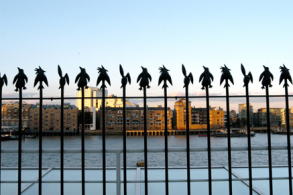
In his new show at the German Architecture Center (DAZ) Matthias Megyeri has developed a design language for the artefacts of protection and security in public space.
Megyeri poses the question: does protection have to be inconsistent with harmony and beauty? His answer is a family of padlocks, chains, fences, [continue …]
The UK government’s digital services platform, gov.uk, has won the Design of the Year award – and if I were running a big IT consulting firm grown fat on big government contracts, I’d be worried.
Gov.uk is a revolutionary web operation that governments around the world are beginning to [continue …]
Over the ages we’ve invested huge amounts of effort and energy to keep cities and nature separate. What would it mean if that were about to change?
 [continue …]

(Photo: Mapping a bioregion with plants – Joachim Robert Cyanotype workshop at FuturePerfect 2012)
In what ways can design [continue …]
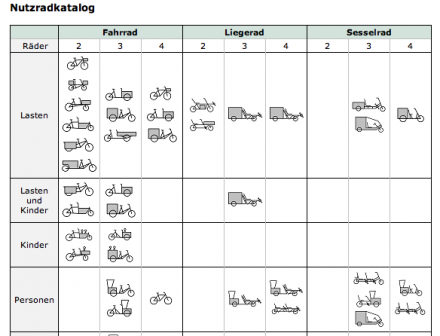
[The chart above is from the online catalogue of cargo bikes at Nutzrad]
India’s many millions of bicycle and rickshaw vendors embody the entrepreneurship, sustainable mobility, social innovation, and thriving local economies, that a sustainable city needs.
As an [continue …]

(Image from http://openwear.org/)
In recent months a working party in India, chaired by Sam Pitroda, Advisor to the Prime Minister of India on Public Information Infrastructure & [continue …]

The term metabolic rift describes the alienation between humans and nature that opened up with the growth of the the modern economy. Could the growth of [continue …]
Allow one hour of preparation for every minute you will be on stage - plus other easy-to-follow rules.
Good news from Germany: A ‘global transformation of values has already begun’. It’s proving tough to leverage changing attitudes into sustainable behaviour – but a transition to a more sustainable society ‘would be welcomed by a significant part of world society’.
In a 400-page report called World in Transition: A [continue …]

Computer rendering by Christian Kerrigan.
Rachel Armstrong, who develops synthetic biology applications for the built environment, believes it could be possible to grow an artificial limestone reef [continue …]

[Above: for CRIT, Mumbai may look a mess – but the city enjoys ‘high transactional capacities’]
The big Audi that collected us from Istanbul airport [continue …]
In Lars von Trier’s 2003 film Dogville (below) there is almost no set. Buildings in the town are represented by a series of white outlines on the floor. Dogville was a to-the-limit exercise in what von Trier calls ‘pure cinema’ – a commitment to use only real locations, and no special effects [continue …]
The map below is of the Baltic Sea. Over the last hundred years its ecosystems have been poisoned almost to death by outputs from a multitude of industries and farming activities in the nine countries that surround it. These deadly flows are shown on the complicated chart below: [continue …]

[Photography courtesy of Marc Adamus] Here follows the talk I gave last week at the Global Design Forum in London.
“Last week [continue …]

Devastating news reaches me that Bill Moggridge has died.
Many readers here will know that Bill Moggridge had been director [continue …]
The Transition movement prefers 'steps' to 'plans'. Here are 12.

A huge urban master plan in southen France gets serious about nature as a project. In Bordeaux 55,000 (above) the city of Bordeaux (CUB) has [continue …]
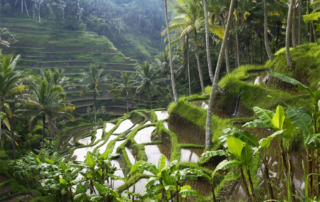
Ritual as Feedback in Bali
The unique social and ecological nature of regional watersheds was the focus of a mesmerising presentation by Stephen Lansing at last month’s poptech conference in Iceland. His key point: Bali’s subak water management system is a “coupled social-ecological system”.
Balinese farmers have been growing rice [continue …]

[Photo taken by the author at Instituto Inhotim, Brazil].
People the world over are divided between radically different conceptions of their future: resource-intensive production on the [continue …]
JOHNTHACKARA designing for life
© The John Thackara blog and website is licensed under a
Creative Commons Attribution-NonCommercial-NoDerivs 3.0 Unported License.
Permissions beyond the scope of this license may be available at john [at] thackara [d o t com], 1993-2026
