About John Thackara

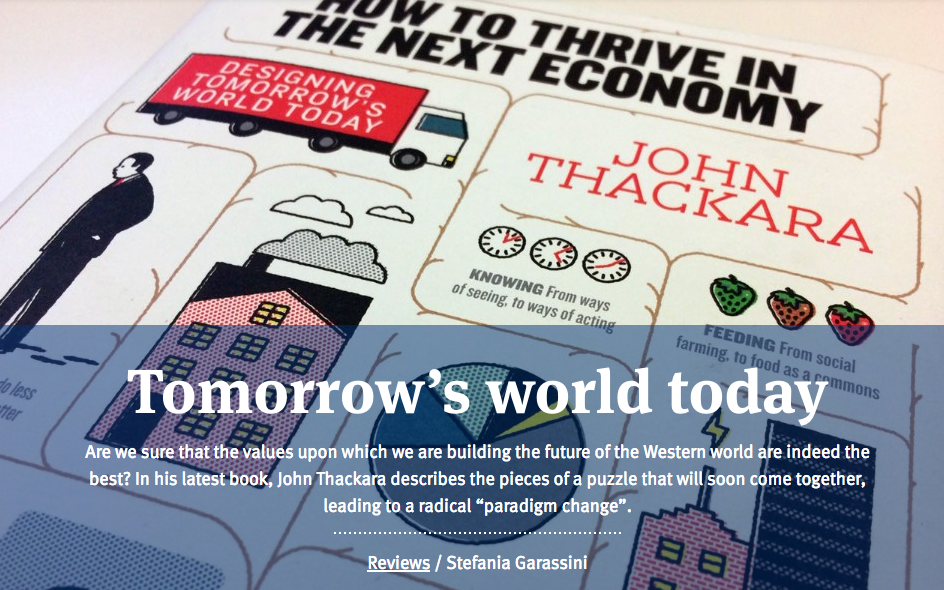
John Thackara is a writer, advisor and bioregional designer. He curated the celebrated Doors of Perception conference for 20 years – first in Amsterdam, later across India – and was commissioner of the UK social innovation biennial Dott 07 and the French design biennial City Eco Lab. Since 2011, Thackara has curated place-based xskool workshops in 20 countries on the theme: Pathways to sustainability: Urban-Rural Reconnection. He studied philosophy before working for ten years as a book publisher and magazine editor. He was the first director (1993 —99) of the Netherlands Design Institute. Today, he is a senior fellow at the Royal College of Art; adjunct professor at Tongji University in Shanghai; visiting professor at School of Visual Arts in New York, and at Pontio Innovation in Wales; and curator of the Social Food Forum. His most recent book – How To Thrive In the Next Economy: Designing Tomorrow’s World Today – has just been published in China.

Manifesto For Utopias Are Over: Cities Are Living Systems

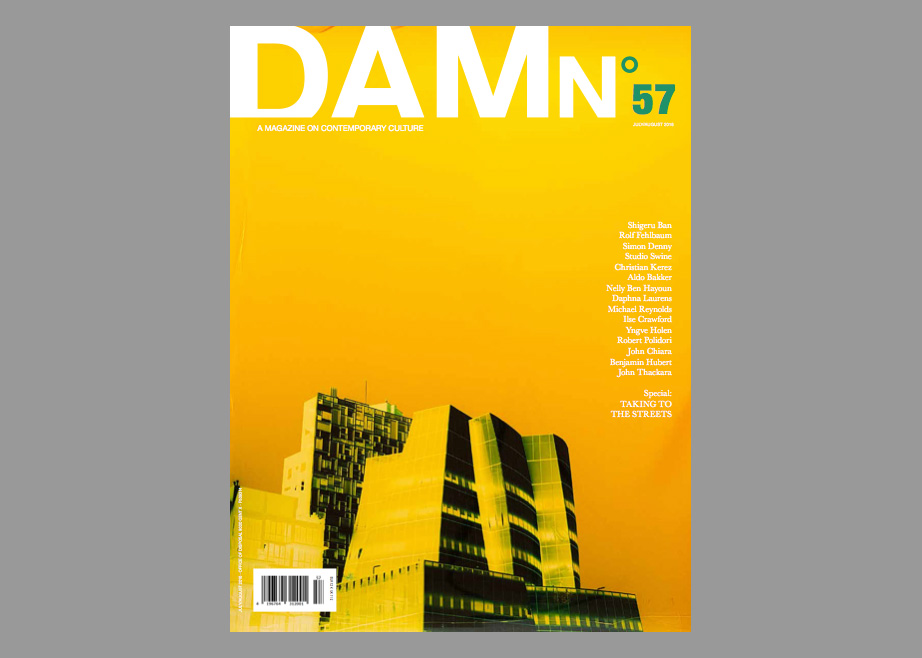
I was asked to write a provocation for DAMN magazine in Italy.

1         Change and innovation are no longer about finely crafted ‘visions’ of some future place and time. Positive change happens when people reconnect – with each other, and with the biosphere – in rich, real-world, [continue …]

2022-10-08T16:07:22+00:00September 19th, 2016|most read, urban-rural|

No organism is truly autonomous – including us

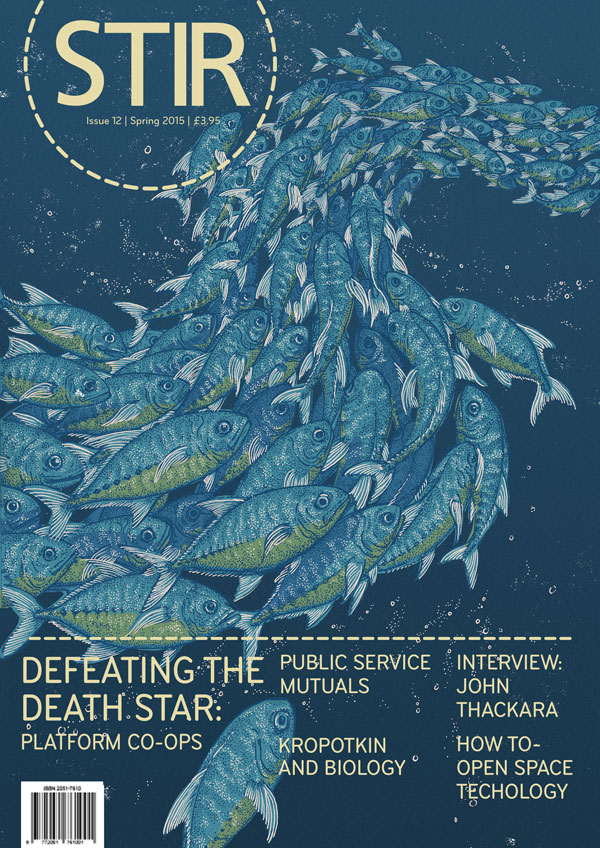
An interview with Jonny Gordon-Farleigh, the editor and publisher of STIR magazine.
 
Current and back issues of the magazine are available in the online shop

Jonny Gordon-Farleigh: Your new book, How to Thrive in the Next Economy, explores practical innovations in [continue …]

2023-04-21T16:16:47+00:00March 26th, 2016|most read, urban-rural|

Bioregions: Notes On A Design Agenda

In myriad projects around the world, a new economy is emerging whose core value is stewardship, not extraction. Growth, in this new story, means soils, biodiversity and watersheds getting healthier, and communities more resilient. These seedlings are cheering, but [continue …]

2023-02-19T10:55:40+00:00April 23rd, 2015|most read, urban-rural|

Design and Energy: Thirteen Great Writers

1. TOM MURPHY – DO THE MATH
If you suspect, but cannot prove, that modern life simply does not add up, you’ll love Tom Murphy’s work. His focus, as a physicist, is to understand whether the impossibility of indefinite physical growth – for example in energy, food, or manufacturing – means that economic [continue …]

2023-07-25T10:17:14+00:00December 25th, 2014|handouts, most read|

Housing Without Building

The family of swallows that spent the summer in the eaves behind my office here in France have headed south for the winter. Soon, as Christmas beckons, they’ll reach their destinations: Botswana, Namibia or South Africa. After just two months gorging on insects, they’ll begin the epic journey back. The [continue …]

2025-01-04T16:53:43+00:00October 2nd, 2014|civic ecology|

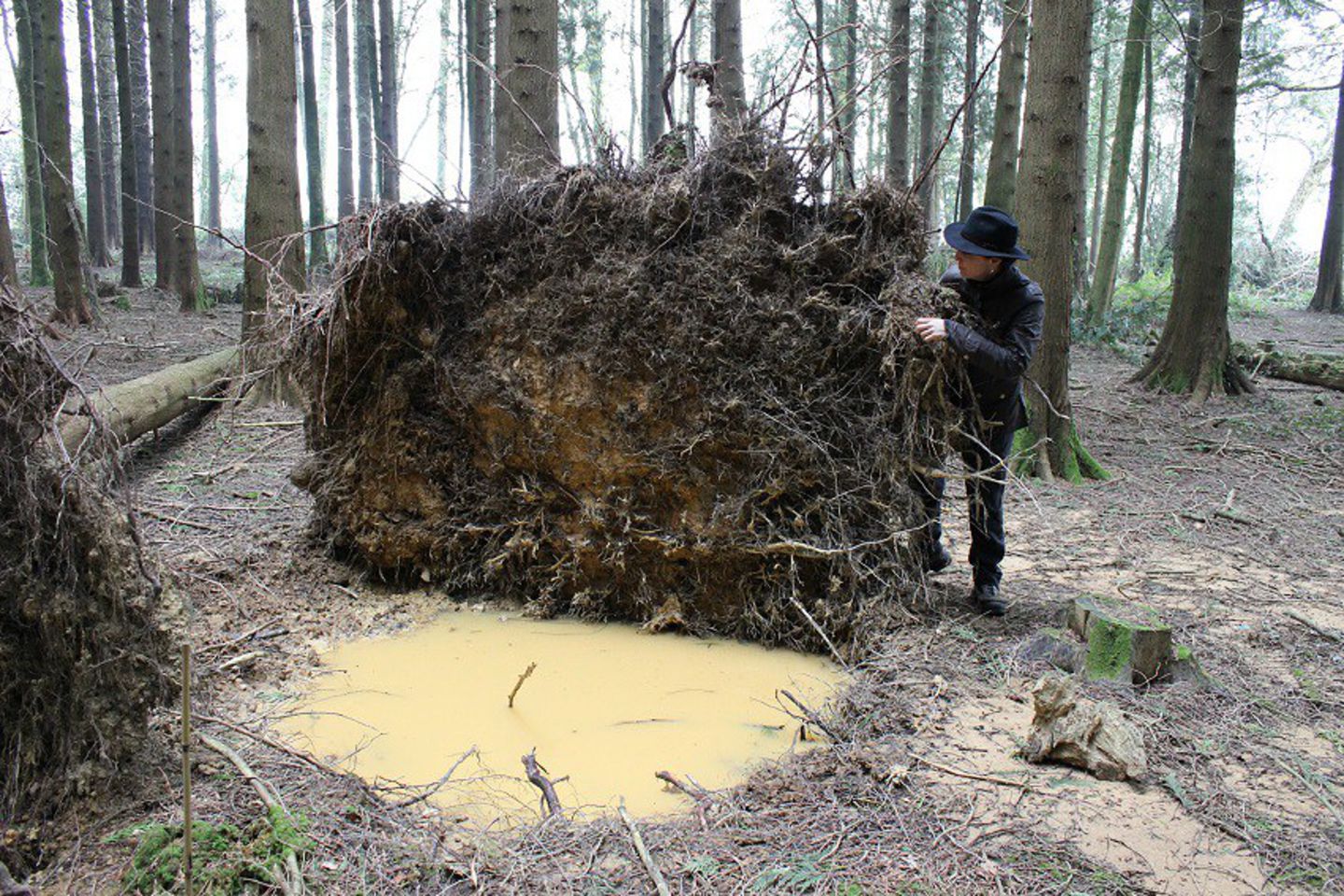
How Does This Forest Think?

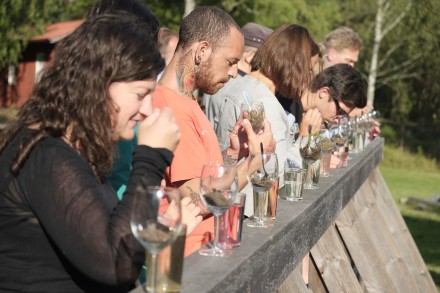
soil-tasting B

AUTUMN NEWSLETTER
Xskool on Grinda
UnBox in India

Forthcoming events

XSKOOL ON GRINDA

Fifty designers, artists and architects spent a week at our Xskool on Grinda last month to explore two questions: What does this food system taste like? and, How does this forest think?

One team [continue …]

2023-04-28T11:49:20+00:00September 1st, 2014|newsletter|

Reading Small Signals

crocus-in-shit

READING SMALL SIGNALS

We’ve invested huge resources over the ages to keep the man-made world, and nature, separate – but there are signs everywhere that those those priorities are changing. Working through the consequences of that is a challenge [continue …]

2023-04-28T11:49:10+00:00June 21st, 2014|newsletter|

When Tech In Care Is Evil

I spent the last two weeks in-and-around a care home in England that looks after people with dementia and terminal illness, and their families – including, this time, mine.

In four wings, each with 12 residents, 24/7 care is provided by teams of trained professionals who work [continue …]

2022-10-04T10:14:53+00:00June 20th, 2014|care|

Food As A Commons

People go hungry not because of a shortage of production, but because the food available is too expensive, or they lack the land to grow it on. In California, the prototype of a combined social, political and technical  solution has been launched which promises to unlock the food system crisis.

[continue …]

2022-10-04T10:14:55+00:00May 13th, 2014|food systems, urban-rural|

Keep Your Stuff Alive

The Tending and Grooming Station (below) is a wondrous collection of combs, brushes and other obscure (to me) gadgets. They are used to primp and revive pre-loved sweaters and cardigans that have been disfigured by bobbles and pilling – those unattractive fuzz balls that appear when short fibers misbehave on woolen garments. 

[continue …]

2022-10-04T10:15:08+00:00April 2nd, 2014|most read|

Cloud Commuting

A two-year project in Belgium proposes new relationships between people, goods, energy, equipment, spaces, and value. Its design objective: a networked mobility ecosystem 

Mobilotoop taxi-van

The signs on the small van describe the services it supports: Taxi; Pick-up; Delivery; Assistance; Vendor; Security; Rental.

Seven [continue …]

2022-10-04T10:15:16+00:00March 25th, 2014|most read, moving|

Conflict and Design

An exhibition in Belgium poses a timely challenge: When confronted by such complex issues as an ageing population, resource depletion, migration, or growing impoverishment, how are we to balance the desire to do something positive, with the need to understand the back story before we intervene?

Screen Shot 2013-12-20 <a href= [continue …]

2022-10-04T10:15:47+00:00January 22nd, 2014|development|

Shoe City vs Sole Rebels

Two radically opposed models of development are being born in Ethiopia at the same time. One is small, local, socially fair, and ecologically respectful. The other takes the globalisation of fashion to a new and more destructive level.

3009143-slide-slide-2-176-feature-number-62-bethlehem-tilahun-alemu-the-100-most-creative-people-in-business

No sooner had I posted a long [continue …]

2022-10-04T10:15:50+00:00January 12th, 2014|development|

A Whole New Cloth: Politics and the Fashion System

In fashion, despite more than 400 eco labels, an incremental ‘do less harm’ approach has addressed the symptoms, but not the principal cause, of our difficulties: an economy based on perpetual growth in a finite world. A new and global ‘leave things better’ politics affirms our co-dependency with living systems [continue …]

2022-10-04T10:15:57+00:00January 5th, 2014|most read|
Go to Top